
How Does a Cybersecurity Department Protect a Company from Cyber Attacks?
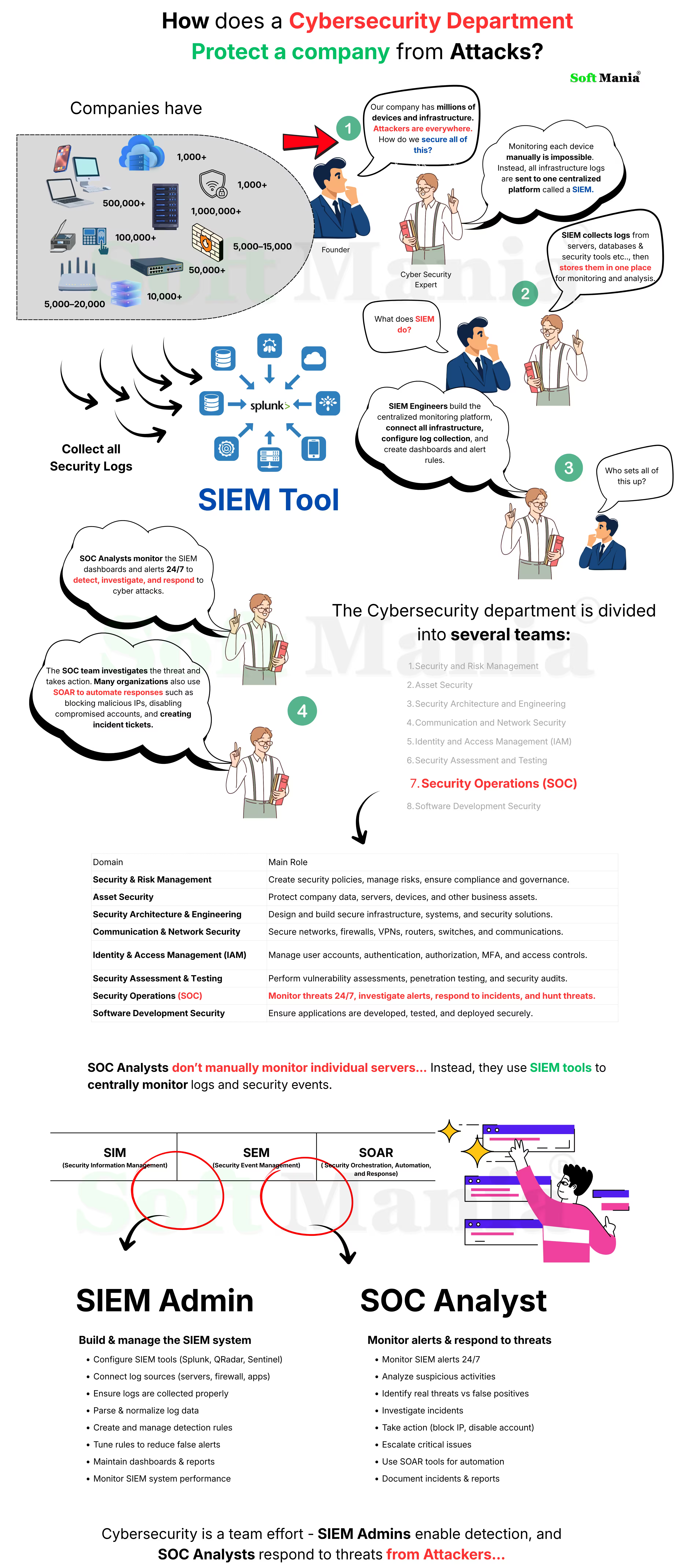
Modern organizations operate thousands or even millions of digital assets. These include servers, databases, applications, firewalls, VPN devices, cloud services, and employee endpoints. At the same time, cyber attackers continuously attempt to exploit vulnerabilities, steal data, and disrupt business operations.
A common question is:
How can a cybersecurity team protect such a massive infrastructure from cyber attacks?
The answer lies in teamwork, centralized monitoring, and security operations.
The Cybersecurity Department Is Not Just One Team
When people hear the term Cybersecurity Team, they often imagine a single group responsible for protecting an organization's systems and data. In reality, cybersecurity is made up of multiple specialized teams, each focusing on different aspects of security. Together, these teams create a strong defense against cyber threats while ensuring business operations remain secure and compliant.
Understanding these departments is important for anyone looking to build a career in cybersecurity, as each team requires different skills, tools, and responsibilities.
1. Security & Risk Management
The Security & Risk Management team establishes the overall security strategy for the organization. Their primary responsibility is to identify risks, create security policies, and ensure compliance with industry standards and regulatory requirements.
Key Responsibilities:
- Security governance and policy creation
- Risk assessment and management
- Regulatory compliance
- Security awareness programs
- Business continuity planning
2. Asset Security
Organizations store valuable information across databases, servers, cloud environments, and user devices. The Asset Security team focuses on protecting these critical business assets throughout their lifecycle.
Key Responsibilities:
- Data classification and protection
- Asset inventory management
- Data retention and disposal policies
- Information handling procedures
- Protection of sensitive business information
3. Security Architecture & Engineering
This team designs and builds secure systems and infrastructure. Their goal is to ensure security is integrated into technology from the beginning rather than added later.
Key Responsibilities:
- Secure infrastructure design
- Security solution implementation
- System hardening
- Security architecture reviews
- Security technology integration
4. Communication & Network Security
Modern organizations rely heavily on networks and communication channels. This team secures network infrastructure and ensures data can travel safely between systems and users.
Key Responsibilities:
- Firewall management
- VPN security
- Network monitoring
- Router and switch security
- Secure communication protocols
5. Identity & Access Management (IAM)
Identity & Access Management ensures that the right people have access to the right resources at the right time—and nothing more.
Key Responsibilities:
- User account management
- Authentication systems
- Authorization controls
- Privileged access management
- Single Sign-On (SSO) implementation
6. Security Assessment & Testing
Security Assessment & Testing teams proactively identify weaknesses before attackers can exploit them. They continuously evaluate the organization's security posture through various testing methods.
Key Responsibilities:
- Vulnerability assessments
- Penetration testing
- Security audits
- Configuration reviews
- Security validation exercises
7. Security Operations Center (SOC)
The Security Operations Center (SOC) acts as the organization's front-line defense against cyber threats. SOC teams monitor security events, investigate suspicious activity, and respond to incidents in real time.
Key Responsibilities:
- Threat monitoring
- Incident investigation
- Security alert analysis
- Threat hunting
- Incident response
8. Software Development Security
Applications are one of the most common targets for cyber attacks. Software Development Security focuses on building secure applications throughout the development lifecycle.
Key Responsibilities:
- Secure coding practices
- Application security testing
- DevSecOps implementation
- Code reviews
- Vulnerability remediation
How These Teams Work Together
Cybersecurity is not the responsibility of a single department. Each team plays a unique role in protecting the organization. While Security Architects build secure environments, IAM teams control access, Assessment teams identify weaknesses, and SOC teams monitor and respond to threats.
A successful cybersecurity program depends on collaboration between all these departments.
The Challenge: Manual Monitoring Is Impossible
Imagine an organization with:
- 100,000+ servers and databases
- 1,000+ security devices
- Thousands of applications
- Multiple cloud environments
Every system generates logs and security events every second.
If security analysts had to manually log in to every server, firewall, database, and application to check for suspicious activity, monitoring would be impossible.
This is where a SIEM (Security Information and Event Management) platform becomes essential.
What Is a SIEM?
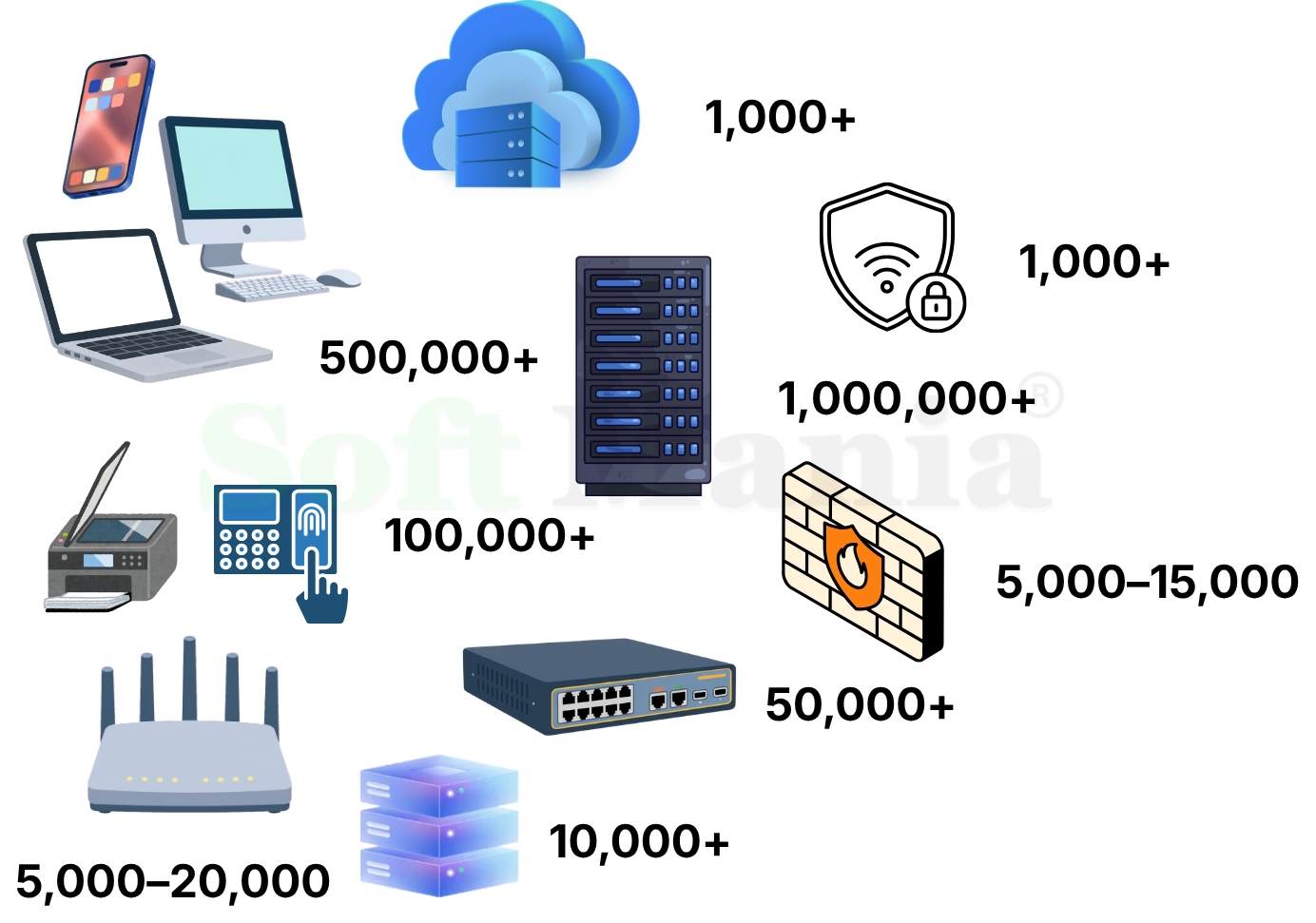
A SIEM is a centralized security monitoring platform that collects logs and security events from across an organization's infrastructure.
Instead of monitoring thousands of systems individually, all logs are sent to a single location for analysis.
A SIEM collects data from:
- Servers
- Databases
- Firewalls
- VPN devices
- Applications
- Cloud platforms
- Endpoint security tools
- Network devices
The SIEM stores, processes, and analyzes this information to help security teams identify potential threats.
Who Sets Up the SIEM?
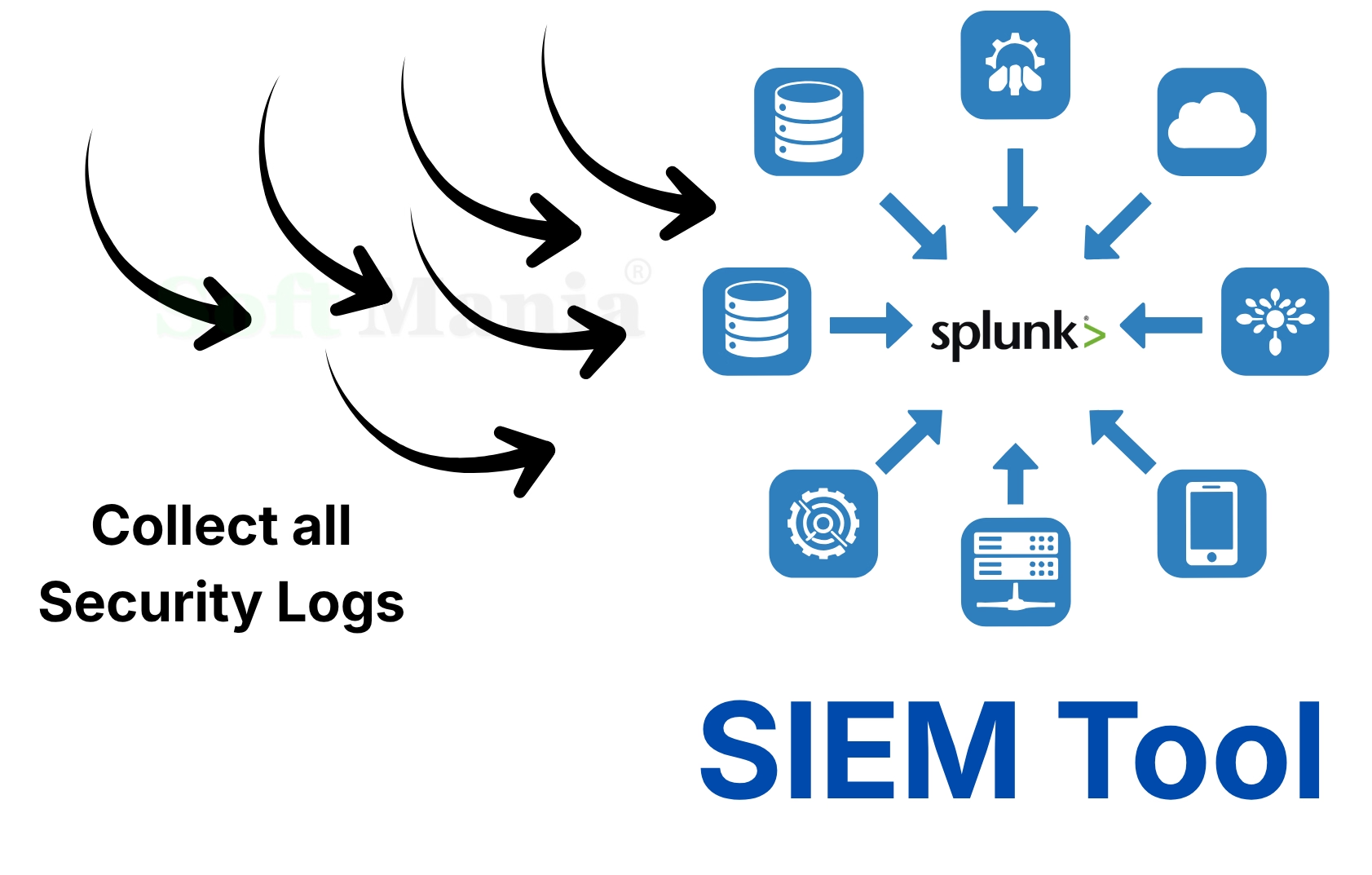
This responsibility typically belongs to the SIEM Admin or SIEM Engineer.
SIEM Admin Responsibilities
The SIEM Admin builds and manages the centralized monitoring platform.
Key responsibilities include:
- Configuring SIEM platforms such as Splunk, QRadar, or Microsoft Sentinel
- Connecting log sources across the organization
- Ensuring logs are collected successfully
- Parsing and normalizing log data
- Creating and managing detection rules
- Reducing false-positive alerts through tuning
- Building dashboards and reports
- Monitoring SIEM platform health and performance
In simple terms:
The SIEM Admin enables visibility and detection across the organization.
Without properly configured log collection and detection rules, security teams would have limited visibility into potential threats.
How Does the SIEM Detect Threats?
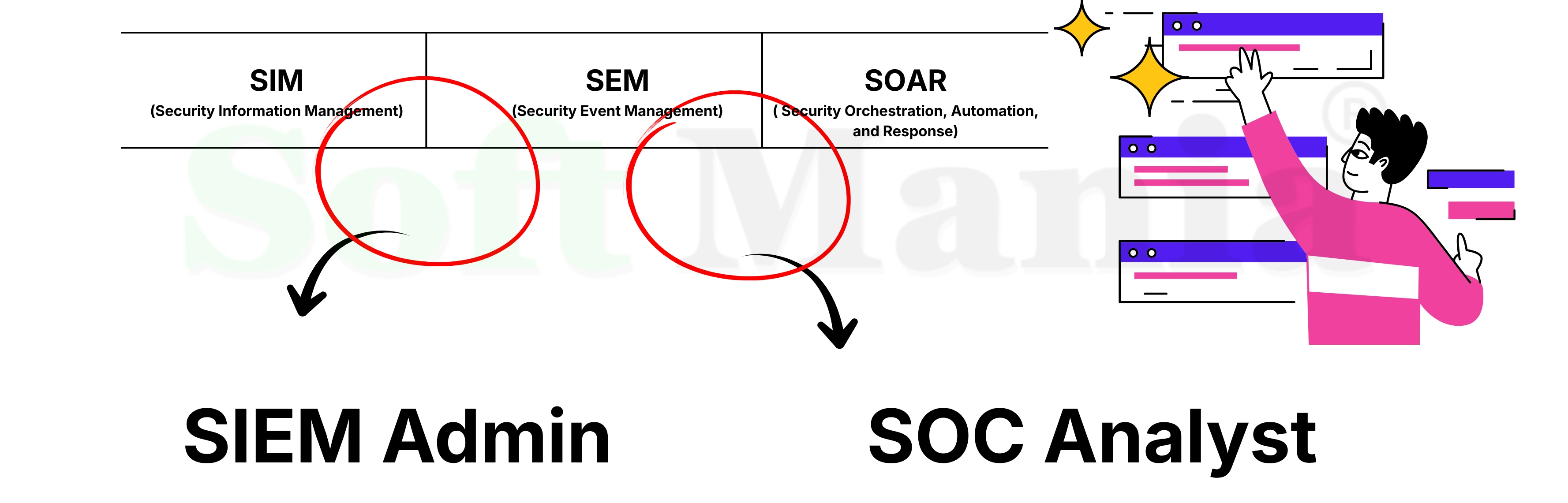
A SIEM consists of two major functions:
SIM (Security Information Management)
SIM focuses on:
- Log collection
- Log storage
- Data retention
- Reporting
Its primary goal is to centralize and organize security information.
SEM (Security Event Management)
SEM focuses on:
- Real-time event monitoring
- Event correlation
- Threat detection
- Alert generation
Its primary goal is to identify suspicious activity and generate alerts for investigation.
Together, SIM and SEM provide the foundation for centralized security monitoring.
Who Responds to Security Alerts?
Once the SIEM detects suspicious activity, the alerts are reviewed by the SOC (Security Operations Center) team.
The SOC team is responsible for monitoring security events and responding to potential threats.
SOC Analyst Responsibilities
SOC Analysts monitor SIEM dashboards and alerts around the clock.
Their responsibilities include:
- Monitoring security alerts
- Investigating suspicious activities
- Identifying real threats and false positives
- Performing incident investigations
- Taking containment actions
- Escalating critical incidents
- Documenting incidents and findings
- Coordinating response efforts
In simple terms:
SOC Analysts detect, investigate, and respond to cyber attacks.
What Happens After a Threat Is Detected?
Let's look at a simple example.
Step 1: Logs Are Generated
A user account experiences multiple failed login attempts.
Step 2: Logs Reach the SIEM
The SIEM collects and analyzes the authentication logs.
Step 3: Detection Rule Triggers
The SIEM identifies unusual behavior and generates an alert.
Step 4: SOC Investigation Begins
A SOC Analyst reviews the alert and investigates the activity.
Step 5: Threat Is Confirmed
The analyst determines that the activity appears malicious.
Step 6: Response Actions Are Taken
The security team may:
- Block the attacker's IP address
- Disable a compromised account
- Isolate affected systems
- Create an incident ticket
- Escalate the incident if necessary
This process helps prevent attackers from gaining access to critical systems.
Where Does SOAR Fit In?
Many organizations use SOAR (Security Orchestration, Automation, and Response) platforms alongside SIEM.
SOAR helps automate repetitive security tasks and incident response workflows.
Examples include:
- Automatically blocking malicious IP addresses
- Disabling compromised user accounts
- Creating incident tickets
- Notifying security teams
- Executing predefined response playbooks
This allows SOC Analysts to respond faster and focus on higher-value investigations.
SIEM Admin vs SOC Analyst
Although they work closely together, their responsibilities are different.
SIEM Admin
- Builds and manages the SIEM platform
- Connects log sources
- Creates detection rules
- Maintains dashboards and reports
- Ensures visibility across the organization
SOC Analyst
- Monitors alerts
- Investigates suspicious activities
- Responds to incidents
- Escalates threats
- Protects the organization from active attacks